08/10/26
Building Assessment Certification

020 3637 7968
info@mihproperty.co.uk020 3637 7968

As of 2026, an estimated 3.5 to 4 million people in London live in flats or apartments. Residential blocks are not a niche housing type—they are the backbone of the capital’s housing stock.
While exact figures vary, data derived from UK census trends and housing stock analysis shows:
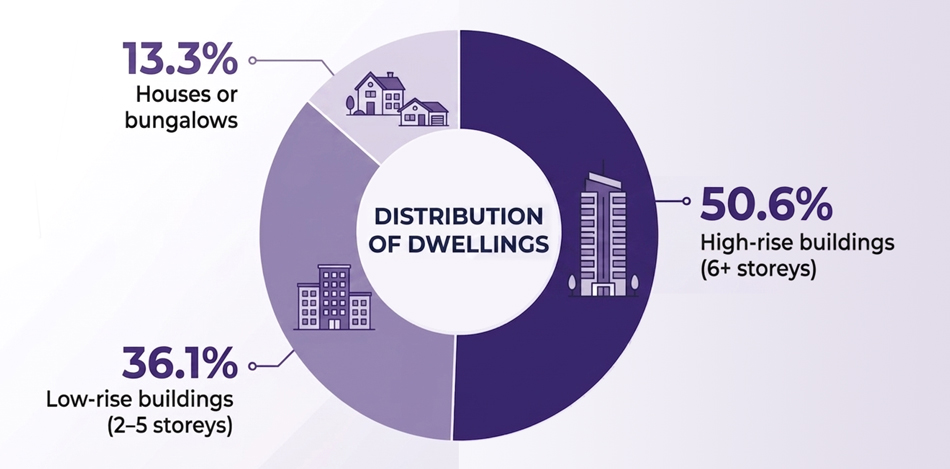
As you can see, residential blocks make up a very important part of London’s housing stock, providing a home and security for millions in the capitals.
Whether a property is owner-occupied or rented, the building itself carries legal obligations. Responsibility typically sits with the freeholder or managing agent, and it is not optional. UK legislation is clear and increasingly strict.
In addition to statutory requirements, the lease itself plays a fundamental role. The covenants within each lease set out precisely who is responsible for maintaining, repairing, and contributing towards the upkeep of the building. These legally binding agreements underpin how costs are apportioned and what standards must be upheld across a block.
Failure to comply is no longer just a matter of poor management, it can result in enforcement action, fines, or worse.
Whether a property is owner-occupied or rented, the building itself carries legal obligations. Responsibility typically sits with the freeholder or managing agent, and it is not optional. UK legislation is clear and increasingly strict.
Effective block management is not reactive, it is systematic, visible, and accountable. It considers:
Quality of Living
The core basics matter more than they’re often given credit for. A leaking roof, unreliable lift, or poor lighting quickly erodes confidence in a building. For elderly residents or families, these are not just inconveniences, they are barriers to the normal workings of daily life. Well-maintained buildings don’t just support sales values, they also command stronger rental values, as tenants are willing to pay a premium to live in a building that is clearly looked after.
Compliance and Risk Management
Fire doors wedged open, inadequate signage, or missed inspections are not minor oversights, they are breaches of statutory duty. Compliance today requires active management, record keeping, and regular inspection.
Communal Spaces
Entrances, stairwells, and corridors set the tone of the interior of a building. Everyone appreciates a sense of orderliness and tidiness when returning home and crossing the threshold at the end of a busy day. Clean, well-lit, and maintained spaces are proven to contribute directly to resident satisfaction and property value.
Grounds and External Areas
Landscaping and external upkeep shouldn’t be underestimated. Poorly maintained grounds quickly become liabilities both visually and in terms of safety. Well-managed outdoor areas, by contrast, enhance both kerb appeal and long-term asset value, as well as improving wellbeing and the sense of living in a fundamentally pleasant environment.
There is no avoiding the reality: proper maintenance costs money.
Service charges exist to ensure that:
Without adequate funding, buildings fall into a cycle of deferred maintenance, which ultimately leads to higher costs and declining property values. This is where professional management becomes critical – not just to organise works, but to prioritise what is needed and ensure quality/value so that funds are well spent.
The difference between a well-run building and a struggling one isn’t luck it’s planning. A structured Planned Preventive Maintenance (PPM) programme ensures that:
A strong maintenance strategy should include:
Although the need for a sinking fund increases the service fee in a way that can feel (to some) like an additional burden they could do without, the reality is that failure to allow for this is simply short-sighted. Every homeowner has to consider the upkeep of their property, and it is far wiser to plan and save incrementally than be wiped out by an unplanned catastrophe. Few things are more important than the roof over our heads.
A well-managed reserve fund allows for:
Crucially, a robust sinking fund policy means that finance is available as the need arises. This avoids delays when urgent works are required. Where funds are already in place, essential repairs – such as restoring a broken lift – can be carried out immediately, rather than waiting for additional contributions to be raised from leaseholders.
Without it, buildings are forced into reactive spending, often resulting in large, unexpected demands on residents. But with an adequate sinking fund in place, costs are planned, shared, and controlled… by far the better position to be in.
Residential blocks are complex, shared environments that require professional oversight and financial planning. In a nutshell, done well, block management:
At MIH we are passionate about getting block management right. We know what we’re doing, and we enjoy the hearing the positive feedback from a contented block = happy landlords, happy tenants and a healthily maintained building.